How to Thrive (A Science-Backed Approach)

Today at a Glance
What’s a Rich Text element?
The rich text element allows you to create and format headings, paragraphs, blockquotes, images, and video all in one place instead of having to add and format them individually. Just double-click and easily create content.
Static and dynamic content editing
A rich text element can be used with static or dynamic content. For static content, just drop it into any page and begin editing. For dynamic content, add a rich text field to any collection and then connect a rich text element to that field in the settings panel. !
- ml;xsml;xa
- koxsaml;xsml;xsa
- mklxsaml;xsa
How to customize formatting for each rich text
Headings, paragraphs, blockquotes, figures, images, and figure captions can all be styled after a class is added to the rich text element using the "When inside of" nested selector system.
This is one of my favorite fables:
A man and his son were bringing their donkey to the market.
As they were walking along the path, a man passed them and said, "You fools, what is a Donkey for but to ride upon?"
So the man put the boy on the donkey and continued. They passed a group of men, one of whom said, "See that lazy youngster, he lets his father walk while he rides."
So the man ordered his boy to get off, and he got on himself. They passed two women, one of whom whispered to the other, "Shame on that lazy lout to let his poor son trudge along."
So the man took his boy up with him on the donkey. A crowd of onlookers yelled, "Aren’t you ashamed of yourself for overloading that donkey?"
So the man and boy got off and carried the donkey on their shoulders. As they crossed a bridge, it kicked loose, fell over the side, and drowned."
That will teach you," said an old man who had quietly followed them from the beginning of the journey.
Please all, and you will please none."
I love this one, probably because I’ve felt the pain of that lesson far too many times.
My life improved dramatically when I stopped sacrificing myself in an effort to meet the narratives that other people had about me.
As it turns out, this was more than anecdotal—it’s grounded in real science.
In 1985, psychologists Edward Deci and Richard Ryan released Intrinsic Motivation and Self-Determination in Human Behavior, a book that introduced a concept they called Self-Determination Theory.
Self-Determination Theory argues that human thriving occurs when three basic conditions are met:
- Autonomy: Feeling in control of one’s own behavior and goals.
- Competence: Feeling effective and capable.
- Relatedness: Feeling connected to others.
In the fable, the loss of these three conditions is systematic.
Autonomy deteriorated each time they altered their behavior to assuage a passerby. Competence was questioned each time they heard a complaint from the crowd. Relatedness crumbled when they were forced to perform in order to fit in.
By the time the donkey falls into the river, the man and boy had already surrendered their self-direction.
This offers a useful framing for your own experience and life:
Where are you surrendering your self-direction to the noise from the crowd?
In your life, there will always be someone standing on the side of the road waiting to tell you that you’re doing it wrong. Telling you to change. To be realistic. To scale back your ambitions. To blend in.
But remember: You are not responsible for the narratives that other people have about you, your growth, or your journey.
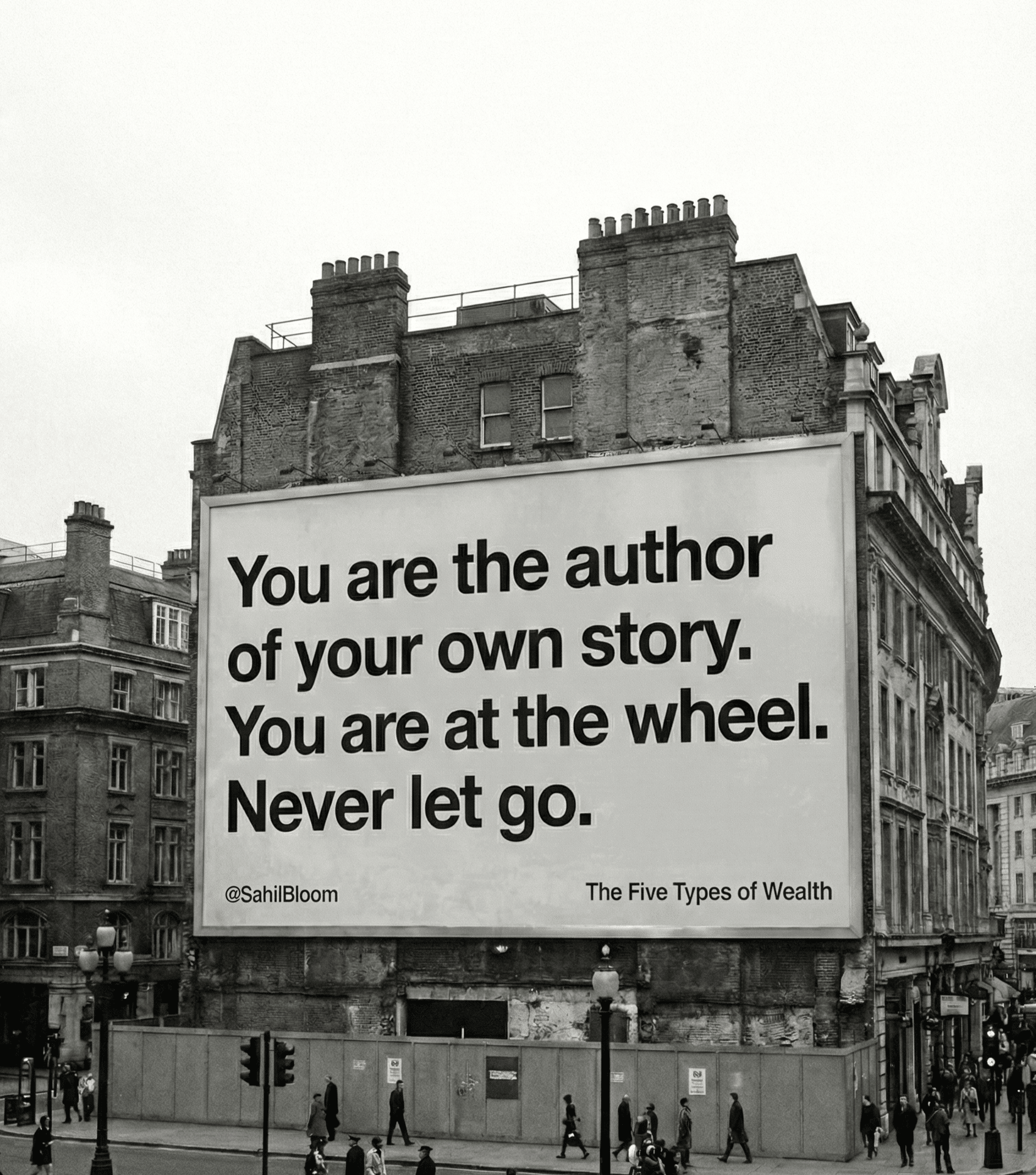
You are the author of your own story. You are at the wheel.
Never let go.