


How I’m Breaking My Phone Addiction In 30 Days

Today at a Glance
What’s a Rich Text element?
The rich text element allows you to create and format headings, paragraphs, blockquotes, images, and video all in one place instead of having to add and format them individually. Just double-click and easily create content.
Static and dynamic content editing
A rich text element can be used with static or dynamic content. For static content, just drop it into any page and begin editing. For dynamic content, add a rich text field to any collection and then connect a rich text element to that field in the settings panel. !
- ml;xsml;xa
- koxsaml;xsml;xsa
- mklxsaml;xsa
How to customize formatting for each rich text
Headings, paragraphs, blockquotes, figures, images, and figure captions can all be styled after a class is added to the rich text element using the "When inside of" nested selector system.
I have an embarrassing confession to make…
I’ve developed an unhealthy addiction to my phone.
Honestly, it’s hard for me to admit. I’m someone who self-identifies as disciplined. I pride myself on my ability to consistently act in alignment with my core values and priorities.
And yet, here I am.
If I’m being honest, the signs of it have been pretty clear:
- I grab my phone for a “quick check” on social media, messages, and email at every natural stopping point in my work. The attention residue created by these quick checks has a damning impact on flow.
- I check my phone during family time with my wife, son, and family. These checks can often trigger an emotion or stress response (from a negative comment or work thing) that spills over into my personal life.
- I carry my phone on me at all times. I sometimes catch myself looking at my phone at stoplights or during meetings.
I’d seen these signs, but I’d rationalize the behavior with a creative mental gymnastic routine that said it was all necessary to stay on top of my work. That I’d miss something if I weren’t constantly connected—some comment, reply, email, DM, or call that would go unnoticed.
Side Note: Even writing this out makes me cringe at its nonsense, but alas, the human capacity to rationalize behavior counter to our goals is unparalleled.
My personal turning point happened a few days ago, during a deep solo reflection session, when I asked one of my favorite questions:
If you were the main character in a movie of your life, what would the audience be screaming at you to do right now?
The answer felt blindingly obvious:
Get off the damn phone.
Everything I want to achieve in my personal and professional life feels like a natural downstream consequence of spending less time on my phone:
- More connected relationships with my wife, son, and family.
- Deep, high quality output on my most important projects. (There's clear science to support the negative cognitive impact of even having your phone on your desk or in your pocket!)
- Improved balance and day-to-day happiness.
I do want to offer one important caveat: I get a lot of value from my phone. I run a remote team across multiple businesses through it. I use social media to interact and connect with many incredible people. I often stumble across powerful writing and videos that improve my life.
In other words, it’s not all good, but it’s also not all bad.
And while a “cold turkey” approach may suit some, that would do me more harm than good. I prefer a pragmatic approach (to this, and any behavior change, in general).
So, here’s my plan to break my addiction (without derailing my work or life)…
This is how I’m going to rewire my brain in the next 30 days:
Step 1: Establish No-Phone Zones
This is the most important—and most challenging—change I’ll be making:
I’m going to create clear No-Phone Zones in my life.
The No-Phone Zones I’ll establish to start:
- Locations: Our kitchen, living room, basement, or playroom. These are the typical places where my phone interferes with how I want to show up in the world as a father and husband.
- Times: Mornings from 5-8am and evenings after work from 5-7pm. These are my sacred deep work and family windows.
- Events: Any family gatherings.
The goal of establishing these No-Phone Zones will be to confine my phone to its most genuinely productive, valuable use cases.
In my case, this would be:
- When I use it to post my daily content in the morning.
- When I capture content during the days in my office or at the gym.
- When I catch up on things after family time in the evenings.
And whenever possible, I’ll use my computer rather than my phone for work-related matters, including social media, emails, messages, and the like.
I don’t expect it to be easy to override my entrenched behavior patterns, so I’m going to force it by using a physical lockbox. I ordered this one, but there are plenty of options to choose from. I put one in my office (for use during the no phone time windows) and one in my car (for use while driving).
Step 2: Use Grayscale Mode
Grayscale Mode removes the colors to make your phone immediately less appealing and addicting.
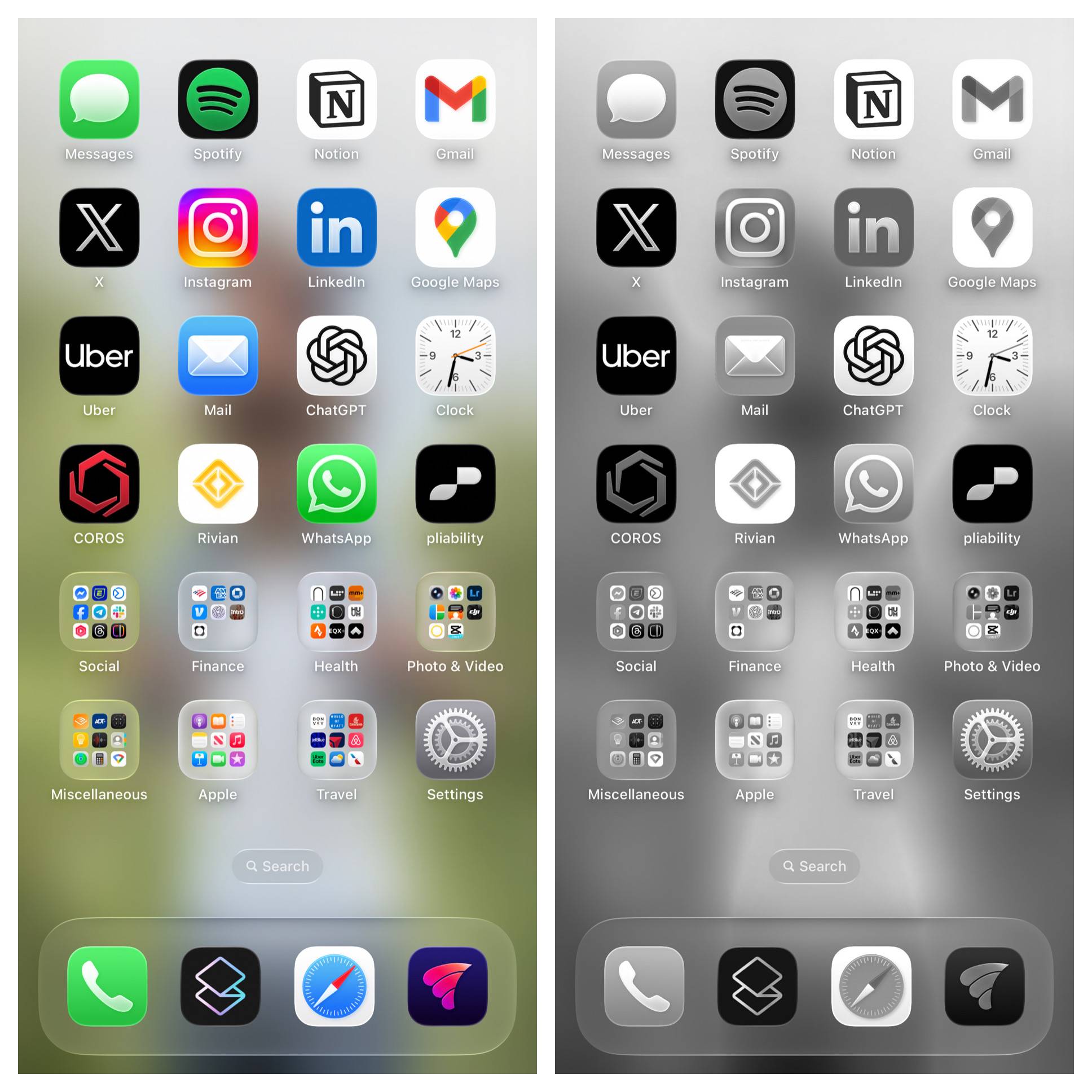
It takes 30 seconds to set up.
If you have an iPhone, follow these steps:
- Settings
- Accessibility
- Display & Text Size
- Color Filters -> On
- Grayscale
Next, create a simple shortcut:
- Settings
- Accessibility
- Accessibility Shortcut
- Color Filters
Now, if you triple-click the side button, you'll be able to toggle it on and off.
For non-iPhone users, you can find instructions here (or with a simple search).
I’ll have my phone on Grayscale Mode at all times other than when I’m posting content (which requires a visual check).
Step 3: Take a Digital Sabbath
I’m going to declare Saturday as a digital sabbath.
My rules for the day:
- No social media apps from sunrise to sundown. We’ll schedule any necessary posting in advance or manage it with the team.
- Phone usage limited to phone calls or messages for specific purposes (e.g. coordinating a get together, etc.).
- Phone in lockbox if at home.
This will serve as a healthy weekly reset to the system.
Note: I could certainly make this more stringent, but I’ll start here and turn up the dial to the extent it doesn’t accomplish the desired reset effect.
The 30-Day Sprint
The net effect of the three actions should be a dramatic reduction in my phone time vs. my baseline.
My assumption is that the downstream effects of that reduction will be profound, but I’ll report back with my thoughts after the month.
In an effort at full transparency, here is my baseline prior to this 30-day sprint.
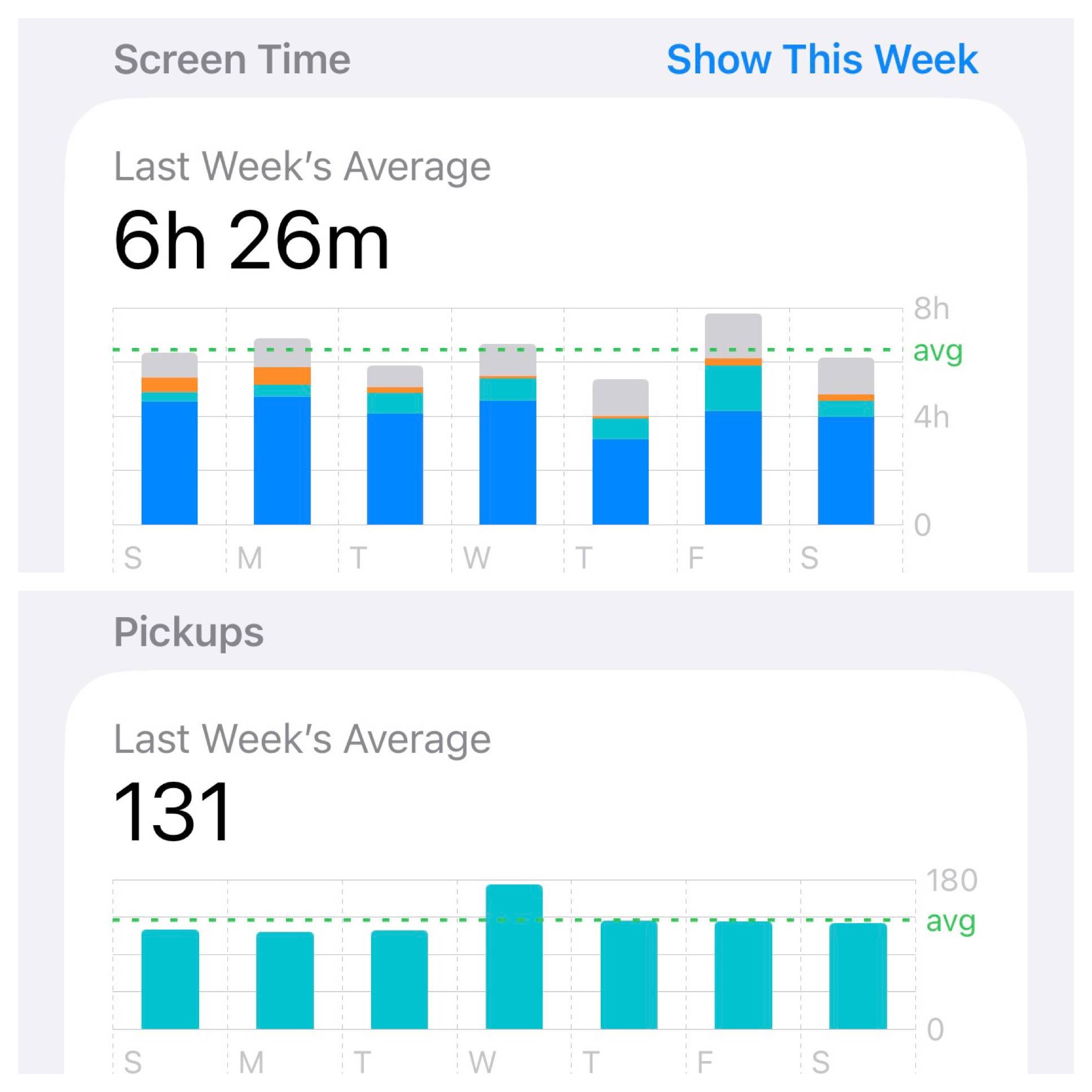
I’m sharing all of this in the interest of accountability and openness. If I’m going to share the hits, I have to be willing to share the misses. This has been an area of my life that has steadily slipped into the big miss territory—and I’m committed to changing that.
In 30 days, I’ll share my experience, takeaways, and updated screen time metrics.
If this resonated with you, I’d love you to join me on this journey:
Just reply to this email with your intentions and we can hold each other accountable. If you’re feeling brave, screenshot your data and share your baseline.
Let’s grow together. Onward and upward.
- Sahil


