Click Here
Cart

Order the instant New York Times bestseller: The 5 Types of Wealth

Order My NYT Bestselling Book

A Japanese Legend With A Lesson For Life

Sahil Bloom

Welcome to the 242 new members of the curiosity tribe who have joined us since Wednesday. Join the 57,887 others who are receiving high-signal, curiosity-inducing content every single week.

What’s a Rich Text element?

The rich text element allows you to create and format headings, paragraphs, blockquotes, images, and video all in one place instead of having to add and format them individually. Just double-click and easily create content.

Static and dynamic content editing

A rich text element can be used with static or dynamic content. For static content,

just drop it into any page and begin editing. For dynamic content, add a rich text field to any collection and then connect a rich text element to that field in the settings panel. Voila!

  • mldsa
  • ,l;cd
  • mkclds

How to customize formatting for each rich text

Headings, paragraphs, blockquotes, figures, images, and figure captions can all be styled after a class is added to the rich text element using the "When inside of"

nested selector

system.

There’s an old fable I love about a villager trying to catch a monkey.

He doesn’t use force. He doesn’t set a net. He doesn’t try to chase it.

Instead, he hooks a single coconut to the side of his house, drills a small hole in it, and places a few morsels of food inside.

That evening at dusk, the monkey quietly slips into the village. It sees the coconut, smells the food, and slips its open hand into the hole.

It feels the food and grabs hold of it excitedly. But when it tries to remove its hand, it can’t.

The hole is just wide enough for an open palm, but not a clenched fist.

The stubborn monkey refuses to let go of the food—and therefore, resigns itself to its own fate.

The villager’s clever trap has worked…

The monkey wasn’t trapped by the coconut. It was trapped by what it refused to release.

I think about this story often, because it’s easy to see the monkey’s mistake from the outside. It’s much harder to recognize when you’re the one with your hand in the coconut.

A few weeks ago, I talked about the ​Region-Beta Paradox​ and the trap of the “good enough” life.

When something is good enough, it lasts longer than when something is bad, simply because you won't take action to change it.

The trap is so insidious because it plays on your fear of letting go. You cling to the identity you have, even when it no longer serves. You attach to the certainty of who you are, even when it holds you back from what you could be.

I wrote:

[The current state is] not painful enough to trigger action. So you drift. You tolerate. You wait. You stay in jobs you've outgrown. In relationships that don't nourish. In routines that feel hollow. Because they're just good enough to avoid sparking a response.

Your hand is trapped in the coconut not because escape is impossible, but because release feels too costly.

You’re trapped by your own nature. Your own unwillingness to let go. To turn around, walk back down the mountain, and start climbing a new one.

I want to conclude with a beautiful Japanese saying:

If you get on the wrong train, get off at the nearest station. The longer it takes you to get off, the more expensive the return trip will be.

Normalize getting off at the next station. Normalize change. Normalize reinvention. Normalize unbecoming in order to become.

So, a question to ask yourself this week:

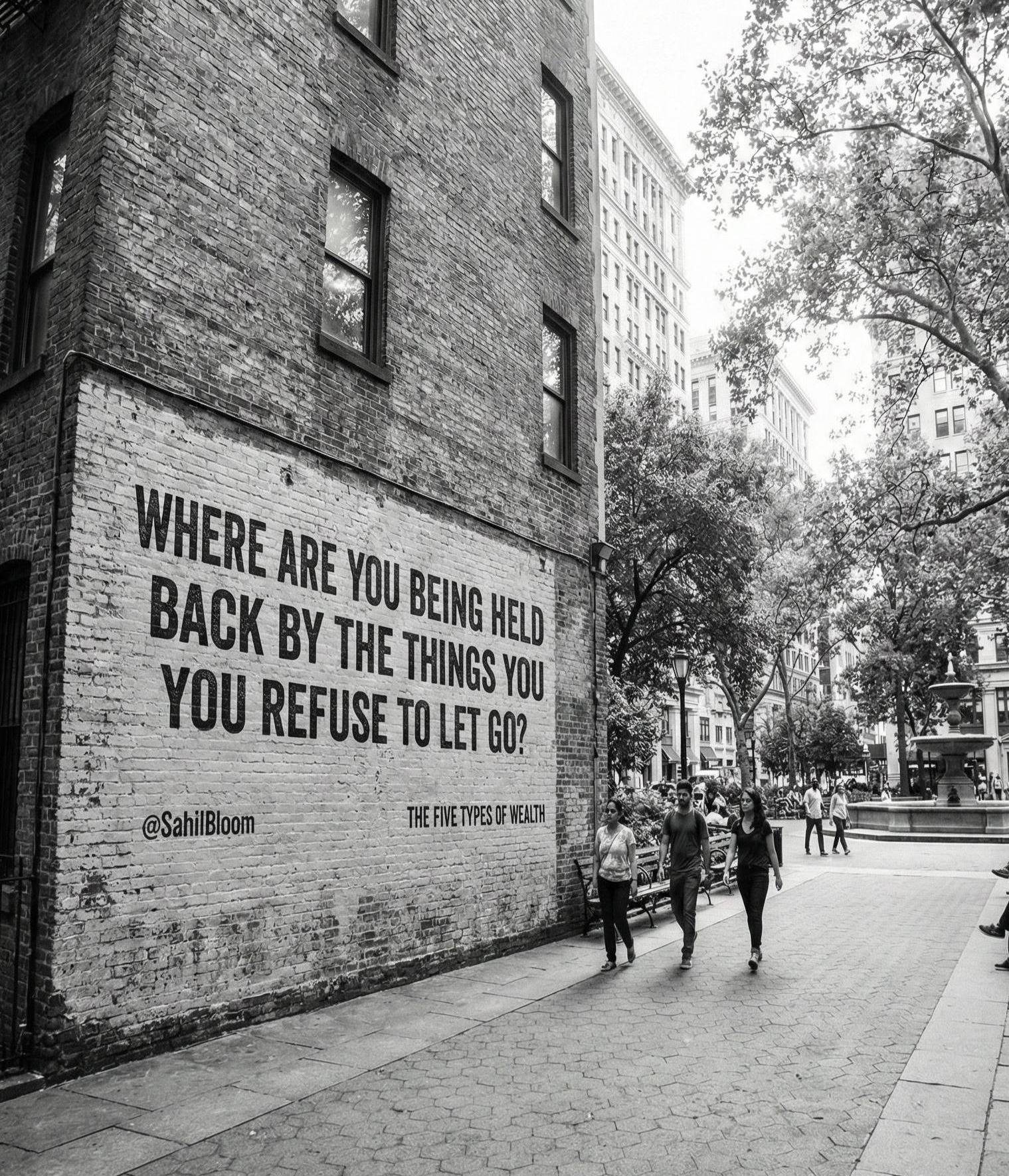
Where are you being held back by the things you refuse to let go?
A Japanese Legend With A Lesson For Life

Sahil Bloom

Welcome to the 242 new members of the curiosity tribe who have joined us since Wednesday. Join the 57,887 others who are receiving high-signal, curiosity-inducing content every single week.

What’s a Rich Text element?

The rich text element allows you to create and format headings, paragraphs, blockquotes, images, and video all in one place instead of having to add and format them individually. Just double-click and easily create content.

Static and dynamic content editing

A rich text element can be used with static or dynamic content. For static content,

just drop it into any page and begin editing. For dynamic content, add a rich text field to any collection and then connect a rich text element to that field in the settings panel. Voila!

  • mldsa
  • ,l;cd
  • mkclds

How to customize formatting for each rich text

Headings, paragraphs, blockquotes, figures, images, and figure captions can all be styled after a class is added to the rich text element using the "When inside of"

nested selector

system.

There’s an old fable I love about a villager trying to catch a monkey.

He doesn’t use force. He doesn’t set a net. He doesn’t try to chase it.

Instead, he hooks a single coconut to the side of his house, drills a small hole in it, and places a few morsels of food inside.

That evening at dusk, the monkey quietly slips into the village. It sees the coconut, smells the food, and slips its open hand into the hole.

It feels the food and grabs hold of it excitedly. But when it tries to remove its hand, it can’t.

The hole is just wide enough for an open palm, but not a clenched fist.

The stubborn monkey refuses to let go of the food—and therefore, resigns itself to its own fate.

The villager’s clever trap has worked…

The monkey wasn’t trapped by the coconut. It was trapped by what it refused to release.

I think about this story often, because it’s easy to see the monkey’s mistake from the outside. It’s much harder to recognize when you’re the one with your hand in the coconut.

A few weeks ago, I talked about the ​Region-Beta Paradox​ and the trap of the “good enough” life.

When something is good enough, it lasts longer than when something is bad, simply because you won't take action to change it.

The trap is so insidious because it plays on your fear of letting go. You cling to the identity you have, even when it no longer serves. You attach to the certainty of who you are, even when it holds you back from what you could be.

I wrote:

[The current state is] not painful enough to trigger action. So you drift. You tolerate. You wait. You stay in jobs you've outgrown. In relationships that don't nourish. In routines that feel hollow. Because they're just good enough to avoid sparking a response.

Your hand is trapped in the coconut not because escape is impossible, but because release feels too costly.

You’re trapped by your own nature. Your own unwillingness to let go. To turn around, walk back down the mountain, and start climbing a new one.

I want to conclude with a beautiful Japanese saying:

If you get on the wrong train, get off at the nearest station. The longer it takes you to get off, the more expensive the return trip will be.

Normalize getting off at the next station. Normalize change. Normalize reinvention. Normalize unbecoming in order to become.

So, a question to ask yourself this week:

Where are you being held back by the things you refuse to let go?