The Random Cage Effect: Why Preparation Beats Planning

Today at a Glance
What’s a Rich Text element?
The rich text element allows you to create and format headings, paragraphs, blockquotes, images, and video all in one place instead of having to add and format them individually. Just double-click and easily create content.
Static and dynamic content editing
A rich text element can be used with static or dynamic content. For static content, just drop it into any page and begin editing. For dynamic content, add a rich text field to any collection and then connect a rich text element to that field in the settings panel. !
- ml;xsml;xa
- koxsaml;xsml;xsa
- mklxsaml;xsa
How to customize formatting for each rich text
Headings, paragraphs, blockquotes, figures, images, and figure captions can all be styled after a class is added to the rich text element using the "When inside of" nested selector system.
This is one of my strongest held beliefs:
Preparation beats planning.
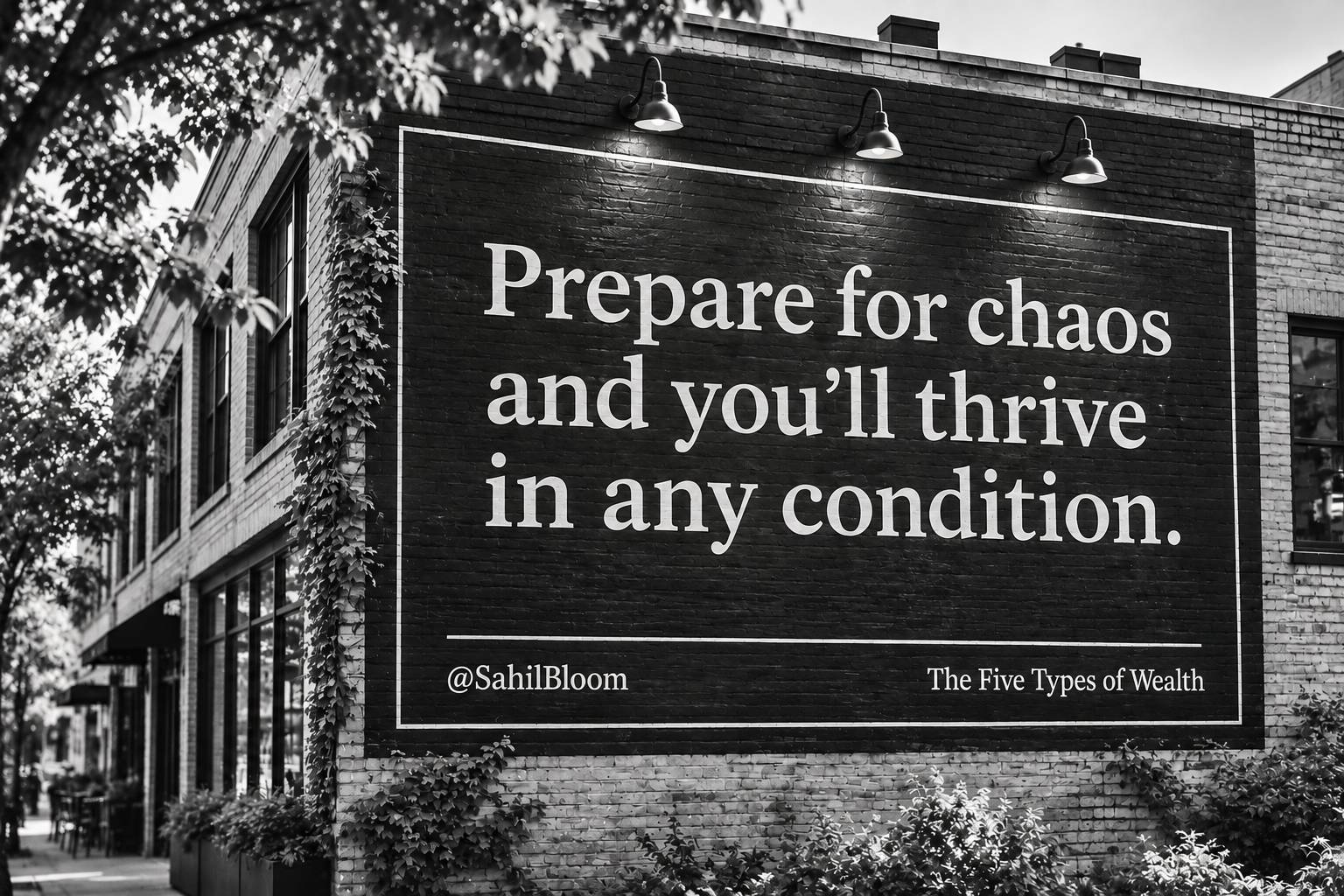
Planning is based on the expectation of order. Preparation is based on the expectation of chaos. Plan for order and you'll be exposed by chaos. Prepare for chaos and you'll thrive in any condition.
And as I recently found out, there's real science to support it.
In 1994, a group of researchers out of Cal Poly gathered 30 collegiate baseball players to run an experiment.
The players would receive extra bi-weekly batting practice sessions, focused on hitting fastballs, curveballs, and changeups, the three types of pitches they were most likely to see in their real games.
The players were split into three groups:
- Blocked: Received 45 pitches per session in a fixed order. 15 fastballs, followed by 15 curveballs, followed by 15 changeups.
- Random: Received 45 pitches per session in a completely randomized order until 15 of each pitch type were received.
- Control: No additional batting practice sessions.
During these practice sessions, the blocked group looked much better than the random group. They achieved more clean hits on average.
If you had watched the sessions, you'd have said those players were more likely to perform well in the real games to come.
But you'd have been wrong...
After six weeks of the additional practice sessions, players were evaluated in a real game-like session where pitches were received randomly.
The random practice group performed significantly better than the blocked group in these game-like tests. They experienced a 57% improvement vs. their pre-experiment baseline compared to a 25% improvement for the blocked group.
And naturally, both additional practice groups outperformed the control group.
So, in simple terms:
- Any additional practice was better than no additional practice; and
- Randomized, game-like additional practice was better than fixed, controlled additional practice.
I might call this the Random Cage Effect:
Conducting practice and preparation in a random, unpredictable manner makes the training feel more difficult but leads to significantly better long-term, real world outcomes.
This echoes my opening assertion.
Planning is the controlled, predictable session. You stand where you are and create a perfect plan for the future. It assumes that the real world is going to be smooth, just like the temperature-controlled practice session. If it is, you may be fine. But the moment chaos hits, the plan goes out the window.
As Mike Tyson famously said, "Everyone has a plan until they get punched in the mouth."
Preparation is the random, unpredictable session. You prepare yourself for the storms. You build the skills to navigate those storms, in whatever form they take. When the chaos hits, you're ready, because you've practiced for it.
So, what can you do with this insight?
I'll give you an application that's had a significant impact on my professional life.
I used to be a nervous public speaker. When my book came out and I started to receive inbound speaking inquiries, I knew that I needed to change my approach to practicing for these occasions.
My old approach was a familiar one:
Create the presentation. Write out notes and talking points. Drop them into the notes section in the deck. Practice from start to finish. Over and over again. Until it feels memorized. Like second nature.
The only problem is that the actual talk always feels very different than the practice session you conducted in the privacy of your office or home.
There are people in the crowd. There are lights. There's a stage. Maybe a podium. People don't laugh at your joke the way you expected. Someone in the audience coughs. Someone's phone rings.
And then, you stumble. Your heart rate elevates. You miss a line. You lose track of where you are. The whole thing starts to unravel.
Because you practiced for a perfect end to end flow in a perfect environment. But reality didn't comply.
So, I changed my approach:
I started breaking the talk into lego blocks. Short blocks based around a single idea. Rather than practice from end to end in order, I would drop into specific blocks and start from there, jumping around randomly.
I practiced while on a light jog, simulating the elevated heart rate of being on stage.
It was much more uncomfortable. The practice sessions felt ugly. I messed up a lot more. But on stage, the results were hard to deny. I became unflappable. Whatever happened, I was able to recenter and execute.
I was prepared for chaos, so I thrived through it.
This idea can be broadly applied to your life:
Training for a race or physical event. Make sure you're ready for how it's going to feel on race day. What if you drop your bottle or one of your gels? What if you need to go to the bathroom? What if your headphones die or your watch breaks?
Prepare for chaos and you'll thrive in any condition.
Building a resilient business. How would your business manage through a variety of external environments? What if interest rates double? What if you can't raise more money? What if the political environment shifts?
Prepare for chaos and you'll thrive in any condition.
Building a resilient life. How exposed are you to the unexpected? How quickly would your family be exposed if you lost your primary job? What can you do to lengthen that window? What cushion have you built into your lifestyle to navigate unexpected fluctuations in income or expenses?
Prepare for chaos and you'll thrive in any condition.
There's one additional finding from the 1994 study that I held back...
After the six weeks of additional practice, in addition to the random session test, both groups were also run through a blocked session.
This session mimicked the exact format in which the blocked group had conducted their practice. 15 fastballs. 15 curveballs. 15 changeups. It was, in effect, a home field advantage for the blocked group.
But the random group won that test as well.
The players who prepared for chaos didn't just outperform in chaos. They outperformed in order, too.
That's the real power in this lesson. Preparation over planning. You don't trade results in one condition for results in another. You become ready for all of them.
Prepare for chaos and you'll thrive in any condition.