Click Here
Cart

Order the instant New York Times bestseller: The 5 Types of Wealth

Order My NYT Bestselling Book

The Paradox of Effort

Sahil Bloom

Welcome to the 242 new members of the curiosity tribe who have joined us since Wednesday. Join the 57,887 others who are receiving high-signal, curiosity-inducing content every single week.

What’s a Rich Text element?

The rich text element allows you to create and format headings, paragraphs, blockquotes, images, and video all in one place instead of having to add and format them individually. Just double-click and easily create content.

Static and dynamic content editing

A rich text element can be used with static or dynamic content. For static content,

just drop it into any page and begin editing. For dynamic content, add a rich text field to any collection and then connect a rich text element to that field in the settings panel. Voila!

  • mldsa
  • ,l;cd
  • mkclds

How to customize formatting for each rich text

Headings, paragraphs, blockquotes, figures, images, and figure captions can all be styled after a class is added to the rich text element using the "When inside of"

nested selector

system.

Carlos Alcaraz is a tennis phenom.

The 22-year-old is the number one player in the world, having won 25 singles titles and 7 Grand Slams in his career. He is the youngest player in history to have completed the Career Grand Slam, winning all four major championships.

If you're a fan of the sport—or just spend enough time on the internet—you've undoubtedly seen clips of Carlos Alcaraz doing completely insane, ​Carlos Alcaraz-type things​.

He is truly a sight to behold.

But amidst the steady drip of clips of his incredible shots in tournaments, I recently came across a video of a very different side of him...

In ​the video​, Carlos Alcaraz is practicing his serve toss. Over and over and over again. It's honestly quite boring to watch (and I imagine even more boring to do).

But there's an important lesson here that everyone needs to hear...

I call it the Paradox of Effort.

You have to put in extraordinary effort to make something appear effortless. Effortless, elegant performances are often just the result of a large volume of effortful, gritty practice. Small things become big things. Simple is not simple.

In other words:
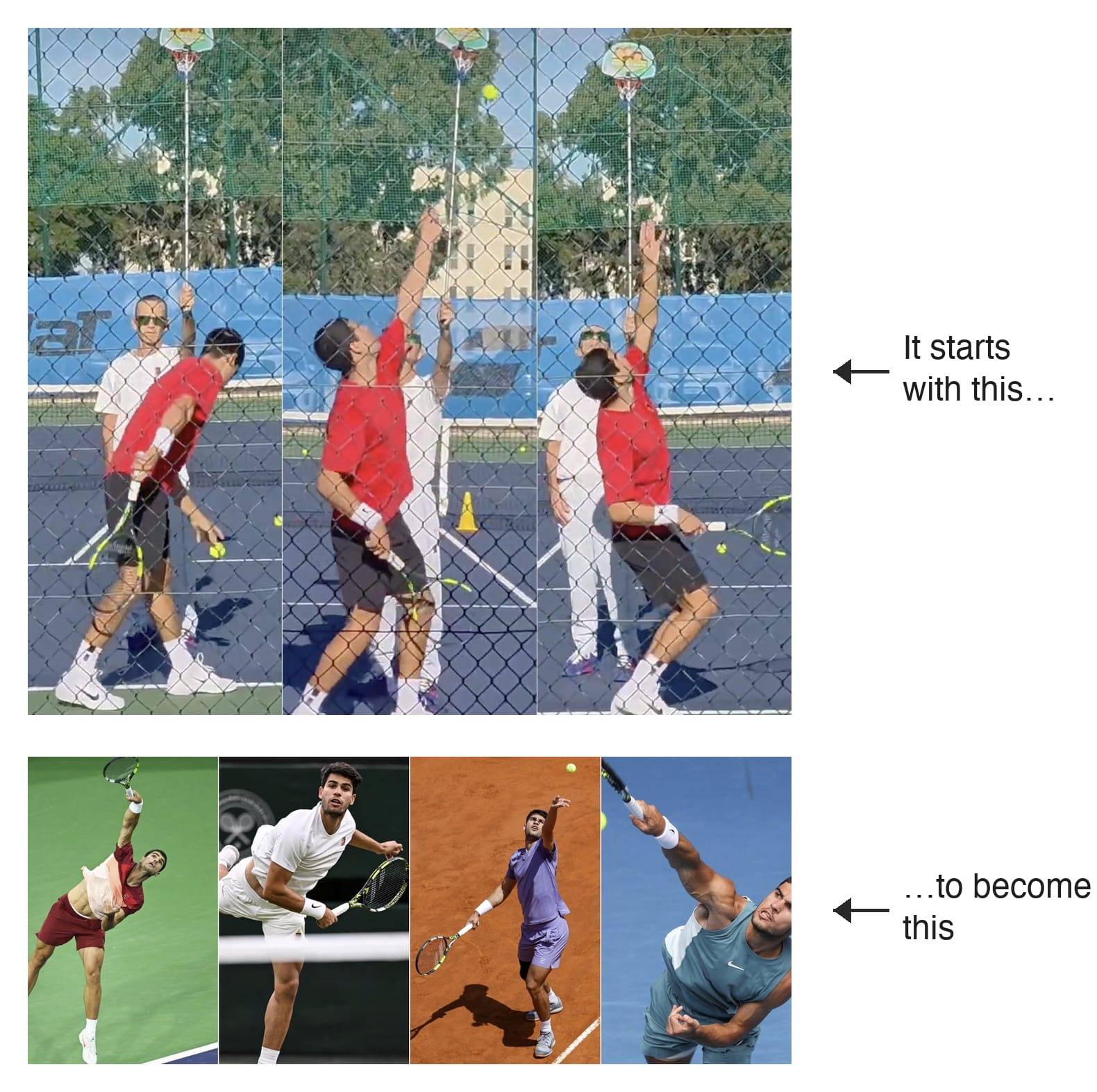
As it turns out, this general concept is one that traces its lineage to a 15th century courtier named Baldesar Castiglione.

Historically, courtiers were expected to serve and perform at the pleasure of the royal figure, including through acts and displays ranging from music and dance to arms and athletic events.

In Castiglione's The Book of the Courtier, which is intended to serve as a "how to guide" for excellence in the role, one particular line stands out (emphasis mine):

"I have found quite a universal rule...to practice in all things a certain sprezzatura [nonchalance], so as to conceal all art and make whatever is done or said appear to be without effort and almost without any thought about it."

This term—sprezzatura—has come to be defined as a "studied carelessness" in the modern English language.

Castiglione himself defined it as "an easy facility in accomplishing difficult actions which hides the conscious effort that went into them."

I think of it as earned effortlessness. The Paradox of Effort.

There's famous lore about Pablo Picasso that alludes to this paradox:

Picasso was walking through the market one day when a woman approached him.

She pulled out a piece of paper and said, "Mr. Picasso, I am a fan of your work. Please, could you do a little drawing for me?"

Picasso smiled and quickly drew a small, but beautiful piece of art on the paper. He handed it back to her.

"That will be one million dollars."

"But Mr. Picasso," the woman protested, "It only took you thirty seconds to draw this little masterpiece."

Picasso smiled, "On the contrary, it took me thirty years to draw that masterpiece in thirty seconds."

The legends of every domain have all shared one trait:

The ability to abstract all of the effort that went into their performance.

From the outside, it looks easy, almost unconscious. In reality, it's the compounded effect of a million tiny, effortful actions.

The Hierarchy of Competence, a model which traces its origins to a 1960 management science ​textbook​, says that we all progress through a fixed series of stages when moving from total novice to total expert at a given craft.
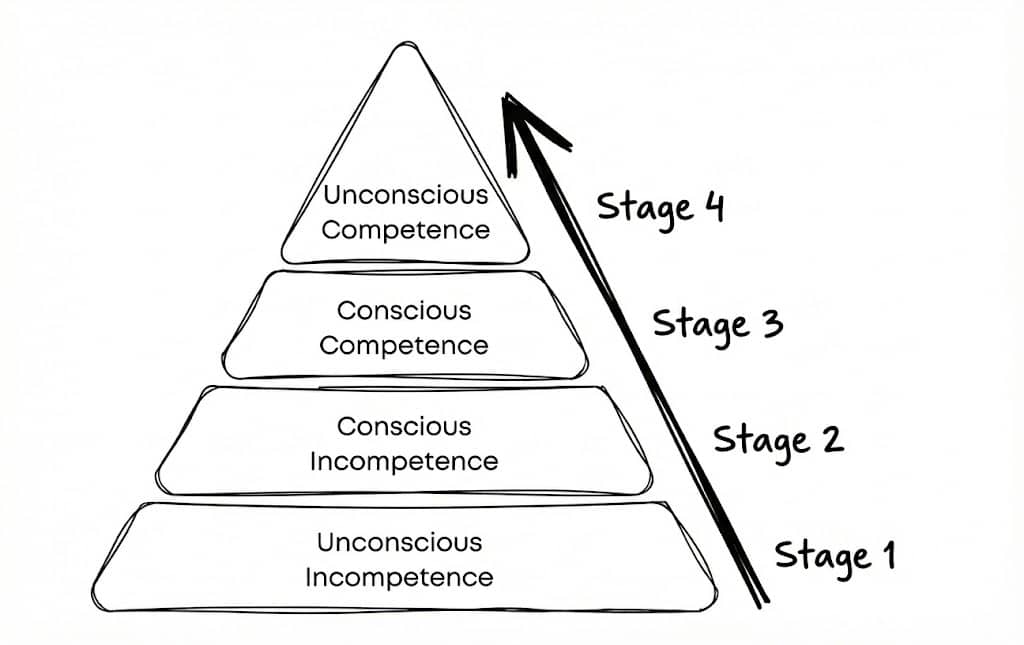
The stages are as follows:

  • Unconscious Incompetence: Complete novice. Unaware of your own incompetence.
  • Conscious Incompetence: Aware of your own incompetence.
  • Conscious Competence: Developed competence at the craft, but execution requires significant conscious effort.
  • Unconscious Competence: Sprezzatura. Extreme competence executed without conscious effort.

And the science supports this idea:

Our brains have myelin, which is a fatty tissue that insulates our neurons and greases them for proper firing.

Sprezzatura is functionally a brain state when the accumulated hours of effortful practice coats the appropriate neural pathways in myelin, allowing the neurons to fire in perfect concert with ease.

When you watch Carlos Alcaraz, or any master at their craft, it's easy to romanticize their talent—and to ignore the thousands of hours of work that contributed to the mastery you see before you.

But the trained eye knows better...

Understanding the Paradox of Effort unlocks two critical things:

  1. The ability to appreciate the years of energy and effort that went into any masterful performance.
  2. The awareness of your current standing and your path to mastery in any given field.

So, the next time you see a master make it look easy, remember:

That ease was earned. One quiet rep at a time.

The question isn't whether you have the talent. It's whether you're willing to work without validation.

To write when nobody’s reading. To build when nobody’s watching. To train when nobody’s cheering.

It doesn’t take talent. It just takes courage.

Those with the courage to work in the dark will eventually shine in the light.

The Paradox of Effort

Sahil Bloom

Welcome to the 242 new members of the curiosity tribe who have joined us since Wednesday. Join the 57,887 others who are receiving high-signal, curiosity-inducing content every single week.

What’s a Rich Text element?

The rich text element allows you to create and format headings, paragraphs, blockquotes, images, and video all in one place instead of having to add and format them individually. Just double-click and easily create content.

Static and dynamic content editing

A rich text element can be used with static or dynamic content. For static content,

just drop it into any page and begin editing. For dynamic content, add a rich text field to any collection and then connect a rich text element to that field in the settings panel. Voila!

  • mldsa
  • ,l;cd
  • mkclds

How to customize formatting for each rich text

Headings, paragraphs, blockquotes, figures, images, and figure captions can all be styled after a class is added to the rich text element using the "When inside of"

nested selector

system.

Carlos Alcaraz is a tennis phenom.

The 22-year-old is the number one player in the world, having won 25 singles titles and 7 Grand Slams in his career. He is the youngest player in history to have completed the Career Grand Slam, winning all four major championships.

If you're a fan of the sport—or just spend enough time on the internet—you've undoubtedly seen clips of Carlos Alcaraz doing completely insane, ​Carlos Alcaraz-type things​.

He is truly a sight to behold.

But amidst the steady drip of clips of his incredible shots in tournaments, I recently came across a video of a very different side of him...

In ​the video​, Carlos Alcaraz is practicing his serve toss. Over and over and over again. It's honestly quite boring to watch (and I imagine even more boring to do).

But there's an important lesson here that everyone needs to hear...

I call it the Paradox of Effort.

You have to put in extraordinary effort to make something appear effortless. Effortless, elegant performances are often just the result of a large volume of effortful, gritty practice. Small things become big things. Simple is not simple.

In other words:

As it turns out, this general concept is one that traces its lineage to a 15th century courtier named Baldesar Castiglione.

Historically, courtiers were expected to serve and perform at the pleasure of the royal figure, including through acts and displays ranging from music and dance to arms and athletic events.

In Castiglione's The Book of the Courtier, which is intended to serve as a "how to guide" for excellence in the role, one particular line stands out (emphasis mine):

"I have found quite a universal rule...to practice in all things a certain sprezzatura [nonchalance], so as to conceal all art and make whatever is done or said appear to be without effort and almost without any thought about it."

This term—sprezzatura—has come to be defined as a "studied carelessness" in the modern English language.

Castiglione himself defined it as "an easy facility in accomplishing difficult actions which hides the conscious effort that went into them."

I think of it as earned effortlessness. The Paradox of Effort.

There's famous lore about Pablo Picasso that alludes to this paradox:

Picasso was walking through the market one day when a woman approached him.

She pulled out a piece of paper and said, "Mr. Picasso, I am a fan of your work. Please, could you do a little drawing for me?"

Picasso smiled and quickly drew a small, but beautiful piece of art on the paper. He handed it back to her.

"That will be one million dollars."

"But Mr. Picasso," the woman protested, "It only took you thirty seconds to draw this little masterpiece."

Picasso smiled, "On the contrary, it took me thirty years to draw that masterpiece in thirty seconds."

The legends of every domain have all shared one trait:

The ability to abstract all of the effort that went into their performance.

From the outside, it looks easy, almost unconscious. In reality, it's the compounded effect of a million tiny, effortful actions.

The Hierarchy of Competence, a model which traces its origins to a 1960 management science ​textbook​, says that we all progress through a fixed series of stages when moving from total novice to total expert at a given craft.

The stages are as follows:

  • Unconscious Incompetence: Complete novice. Unaware of your own incompetence.
  • Conscious Incompetence: Aware of your own incompetence.
  • Conscious Competence: Developed competence at the craft, but execution requires significant conscious effort.
  • Unconscious Competence: Sprezzatura. Extreme competence executed without conscious effort.

And the science supports this idea:

Our brains have myelin, which is a fatty tissue that insulates our neurons and greases them for proper firing.

Sprezzatura is functionally a brain state when the accumulated hours of effortful practice coats the appropriate neural pathways in myelin, allowing the neurons to fire in perfect concert with ease.

When you watch Carlos Alcaraz, or any master at their craft, it's easy to romanticize their talent—and to ignore the thousands of hours of work that contributed to the mastery you see before you.

But the trained eye knows better...

Understanding the Paradox of Effort unlocks two critical things:

  1. The ability to appreciate the years of energy and effort that went into any masterful performance.
  2. The awareness of your current standing and your path to mastery in any given field.

So, the next time you see a master make it look easy, remember:

That ease was earned. One quiet rep at a time.

The question isn't whether you have the talent. It's whether you're willing to work without validation.

To write when nobody’s reading. To build when nobody’s watching. To train when nobody’s cheering.

It doesn’t take talent. It just takes courage.

Those with the courage to work in the dark will eventually shine in the light.