Click Here
Cart

Order the instant New York Times bestseller: The 5 Types of Wealth

Order My NYT Bestselling Book

It Was Just a Game of Catch

Sahil Bloom

Welcome to the 242 new members of the curiosity tribe who have joined us since Wednesday. Join the 57,887 others who are receiving high-signal, curiosity-inducing content every single week.

What’s a Rich Text element?

The rich text element allows you to create and format headings, paragraphs, blockquotes, images, and video all in one place instead of having to add and format them individually. Just double-click and easily create content.

Static and dynamic content editing

A rich text element can be used with static or dynamic content. For static content,

just drop it into any page and begin editing. For dynamic content, add a rich text field to any collection and then connect a rich text element to that field in the settings panel. Voila!

  • mldsa
  • ,l;cd
  • mkclds

How to customize formatting for each rich text

Headings, paragraphs, blockquotes, figures, images, and figure captions can all be styled after a class is added to the rich text element using the "When inside of"

nested selector

system.

It was just a game of catch...

Last weekend, my family and I made our annual pilgrimage to a small community in northwest Connecticut.

When I was 18 months old, my parents had rented a house there for the summer, seeking an escape from the New York City heat.

The next year, we went back. The following, we went again.

Soon, the tiny enclave became like a second home. I met my two best friends there. I caught my first fish there. I had my first crush there.

But perhaps most importantly, I played my first game of catch there.

As I remember it, I was probably about five years old. My dad had a softball and a couple of old baseball gloves. And there, in the tall, overgrown grass, we threw the ball back and forth.

I'm sure it was nothing special. But it was the start of something much more.

As the years wore on, I got bigger and the ball started moving faster.

My dad eventually had to buy a catcher's mitt when I started hurting his hand with the throws I was able to unleash.

He hung in there, though.

We played catch damn near every single day when I was a kid.

It didn't really matter what time of year or what time of day. We'd play catch in the snow in January. In the early morning light before school. In the dim light of the evenings when he got home from work.

I dug up some dirt in our backyard and built a little pitching mound. Measured out 60 feet and set up a plate. When he got home from work, he smiled, put on his catcher's mitt, and squatted back there dutifully.

In high school, when I started getting college scholarship offers, we played catch. While on the team at Stanford, when my family went on vacation, we played catch.

But then, my career ended. In part, due to the years of wear on a tired shoulder, in part, because eventually your talent takes you as far as you can go. No matter the reason, my baseball days ended.

And with it, our game of catch.

You know, time is a funny thing.

Usually, it goes unnoticed. It exists, but not really. Only in some abstract sense. It flows under the surface. Adjacent to your reality, but not exactly in it.

The routines of life make it go faster. You settle into patterns. Paths with gravity. You take a job. You establish a place. You start a family. The days start blending together. They become weeks, months, years, even decades.

But then, something breaks. There's some collision. It may be a death that erases your childish belief in immortality. Or, more simply, just a flash. A glimpse of time lost. Suddenly, time gets thrust to the surface. Bubbling up and exploding. A rush of emotion, fear, and tension.

Time goes unnoticed, until it's the only thing you notice.

I've felt that most painfully with my parents. Something about the juxtaposition of the newness of my son's life with the suddenly apparent maturity of my parents' lives has forced time to the surface of my reality.

My dad is 70 now.

In some ways, that 70-year-old version feels like a stranger to me.

I think the image we have of our parents never really changes from the one we establish as kids. I still see my dad as the young, vibrant, athletic young man. The one who could hit the ball farther than anyone I knew. The one who could toss me up on his shoulders in a flash. The one who could beat me in a race (but usually let me win). I still see that young dad in his eyes, in his energy, in his curiosity for life.

And while he's doing great physically, that "great" now comes with the classic conversational asterisk, for his age.

In some painful sense, I imagine the 70-year-old version feels like a stranger to him, too.

I don't think any of us grows comfortable with our own age and mortality. Yes, we can age gracefully. Yes, we can slow the decline through our actions. But there's nothing fun about feeling that your body can no longer do what it once could.

Time is cruel. But that cruelty carries the seeds of beauty.

The most beautiful things in life are made beautiful by their impermanence.

The vibrant sunset. The smile from an old friend. The high from a hard workout. The perfect silence during a walk. The smell after a summer rainstorm. The laugh of a young child.

All of these things are special precisely because they don't last.

So, what are we to do about all of this?

Perhaps we must simply give in to time. Embrace its unending, relentless flow. Live as we are. Do as we can.

But what if, in truth, we have a bit more power than that?

What if it's possible, in some imperfect, impermanent way, to control time? To bend time and space. To really be there. To really feel it. To embrace it, without giving in to it.

To live as we want. To do as we dream.

That theory is what brings me back to last Sunday, when I felt compelled to unlock one of the old cabinets in my parent's cottage.

It was a cabinet that, when opened, had the feel of a time capsule. Dust and cobwebs everywhere. A musty smell. Like reaching into it was reaching back in time.

I pulled out my old baseball glove. And my dad's old catcher's mitt.

I walked outside, where I found my dad playing with his grandsons on the swings.

I held up the two gloves, a smile across my face.

"Hey, Dad, wanna have a catch?"

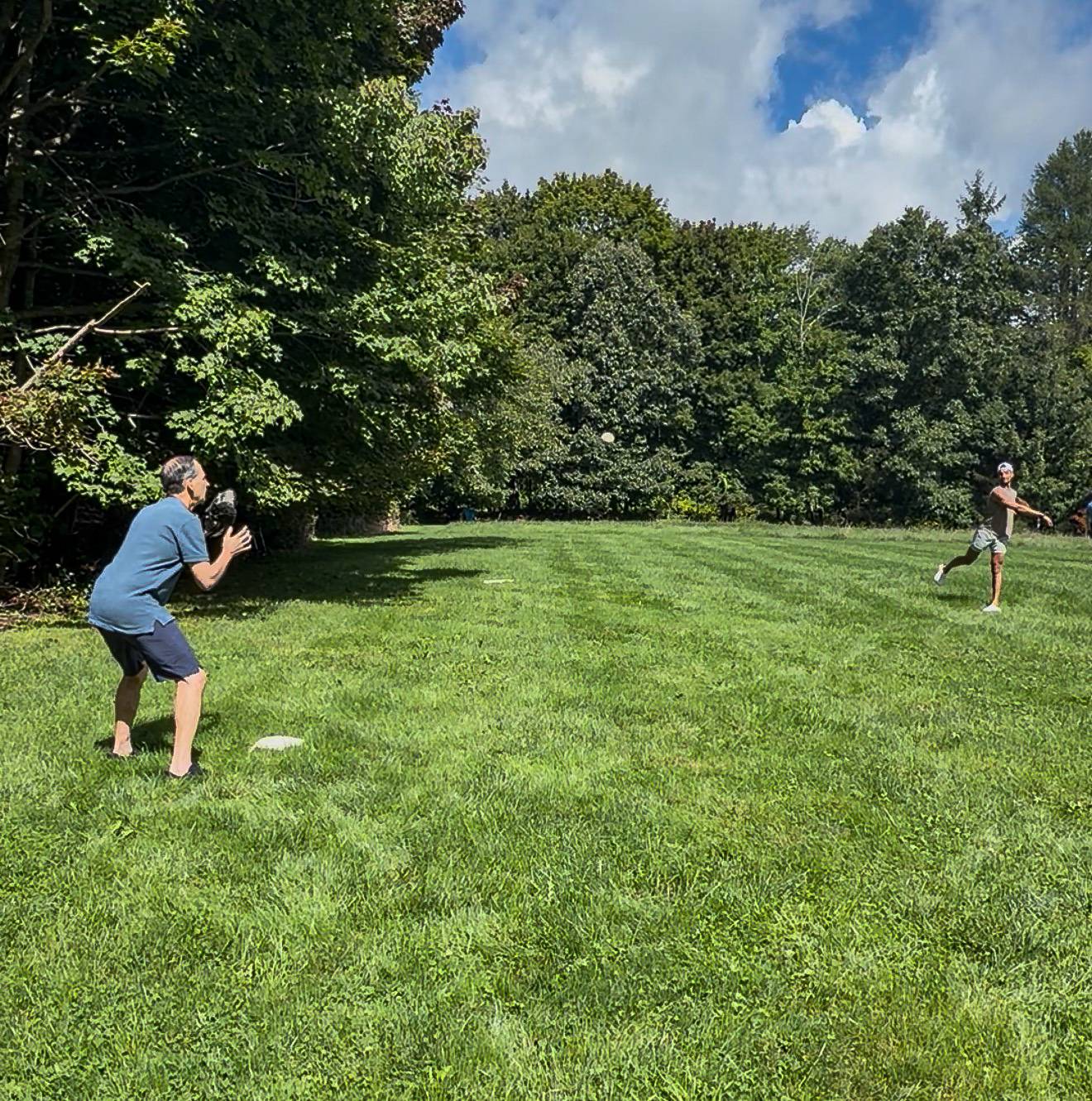
I smiled. He smiled. We walked side by side out onto the field.

And there, in the tall, overgrown grass, we threw the ball back and forth.

As we did, something amazing happened.

Time melted away. 30 years disappeared. He wasn't 70. I wasn't 35.

I was that little boy again. And he was my young dad. Just playing catch for no purpose at all.

It was just a game of catch. But it was so much more.
It Was Just a Game of Catch

Sahil Bloom

Welcome to the 242 new members of the curiosity tribe who have joined us since Wednesday. Join the 57,887 others who are receiving high-signal, curiosity-inducing content every single week.

What’s a Rich Text element?

The rich text element allows you to create and format headings, paragraphs, blockquotes, images, and video all in one place instead of having to add and format them individually. Just double-click and easily create content.

Static and dynamic content editing

A rich text element can be used with static or dynamic content. For static content,

just drop it into any page and begin editing. For dynamic content, add a rich text field to any collection and then connect a rich text element to that field in the settings panel. Voila!

  • mldsa
  • ,l;cd
  • mkclds

How to customize formatting for each rich text

Headings, paragraphs, blockquotes, figures, images, and figure captions can all be styled after a class is added to the rich text element using the "When inside of"

nested selector

system.

It was just a game of catch...

Last weekend, my family and I made our annual pilgrimage to a small community in northwest Connecticut.

When I was 18 months old, my parents had rented a house there for the summer, seeking an escape from the New York City heat.

The next year, we went back. The following, we went again.

Soon, the tiny enclave became like a second home. I met my two best friends there. I caught my first fish there. I had my first crush there.

But perhaps most importantly, I played my first game of catch there.

As I remember it, I was probably about five years old. My dad had a softball and a couple of old baseball gloves. And there, in the tall, overgrown grass, we threw the ball back and forth.

I'm sure it was nothing special. But it was the start of something much more.

As the years wore on, I got bigger and the ball started moving faster.

My dad eventually had to buy a catcher's mitt when I started hurting his hand with the throws I was able to unleash.

He hung in there, though.

We played catch damn near every single day when I was a kid.

It didn't really matter what time of year or what time of day. We'd play catch in the snow in January. In the early morning light before school. In the dim light of the evenings when he got home from work.

I dug up some dirt in our backyard and built a little pitching mound. Measured out 60 feet and set up a plate. When he got home from work, he smiled, put on his catcher's mitt, and squatted back there dutifully.

In high school, when I started getting college scholarship offers, we played catch. While on the team at Stanford, when my family went on vacation, we played catch.

But then, my career ended. In part, due to the years of wear on a tired shoulder, in part, because eventually your talent takes you as far as you can go. No matter the reason, my baseball days ended.

And with it, our game of catch.

You know, time is a funny thing.

Usually, it goes unnoticed. It exists, but not really. Only in some abstract sense. It flows under the surface. Adjacent to your reality, but not exactly in it.

The routines of life make it go faster. You settle into patterns. Paths with gravity. You take a job. You establish a place. You start a family. The days start blending together. They become weeks, months, years, even decades.

But then, something breaks. There's some collision. It may be a death that erases your childish belief in immortality. Or, more simply, just a flash. A glimpse of time lost. Suddenly, time gets thrust to the surface. Bubbling up and exploding. A rush of emotion, fear, and tension.

Time goes unnoticed, until it's the only thing you notice.

I've felt that most painfully with my parents. Something about the juxtaposition of the newness of my son's life with the suddenly apparent maturity of my parents' lives has forced time to the surface of my reality.

My dad is 70 now.

In some ways, that 70-year-old version feels like a stranger to me.

I think the image we have of our parents never really changes from the one we establish as kids. I still see my dad as the young, vibrant, athletic young man. The one who could hit the ball farther than anyone I knew. The one who could toss me up on his shoulders in a flash. The one who could beat me in a race (but usually let me win). I still see that young dad in his eyes, in his energy, in his curiosity for life.

And while he's doing great physically, that "great" now comes with the classic conversational asterisk, for his age.

In some painful sense, I imagine the 70-year-old version feels like a stranger to him, too.

I don't think any of us grows comfortable with our own age and mortality. Yes, we can age gracefully. Yes, we can slow the decline through our actions. But there's nothing fun about feeling that your body can no longer do what it once could.

Time is cruel. But that cruelty carries the seeds of beauty.

The most beautiful things in life are made beautiful by their impermanence.

The vibrant sunset. The smile from an old friend. The high from a hard workout. The perfect silence during a walk. The smell after a summer rainstorm. The laugh of a young child.

All of these things are special precisely because they don't last.

So, what are we to do about all of this?

Perhaps we must simply give in to time. Embrace its unending, relentless flow. Live as we are. Do as we can.

But what if, in truth, we have a bit more power than that?

What if it's possible, in some imperfect, impermanent way, to control time? To bend time and space. To really be there. To really feel it. To embrace it, without giving in to it.

To live as we want. To do as we dream.

That theory is what brings me back to last Sunday, when I felt compelled to unlock one of the old cabinets in my parent's cottage.

It was a cabinet that, when opened, had the feel of a time capsule. Dust and cobwebs everywhere. A musty smell. Like reaching into it was reaching back in time.

I pulled out my old baseball glove. And my dad's old catcher's mitt.

I walked outside, where I found my dad playing with his grandsons on the swings.

I held up the two gloves, a smile across my face.

"Hey, Dad, wanna have a catch?"

I smiled. He smiled. We walked side by side out onto the field.

And there, in the tall, overgrown grass, we threw the ball back and forth.

As we did, something amazing happened.

Time melted away. 30 years disappeared. He wasn't 70. I wasn't 35.

I was that little boy again. And he was my young dad. Just playing catch for no purpose at all.

It was just a game of catch. But it was so much more.